
Sinus & Nasal Polyps
Nasal Polyps 101: Why They Form and What to Do When Sprays Stop Working
Nasal polyps are a common, treatable cause of chronic congestion and lost sense of smell. Here's what causes them, how they connect to asthma and allergies, and what treatment options exist beyond a nasal spray.
Published October 30, 2026 · 4 min read
Medically reviewed by Jovany Cartagena, MSN, FNP-BC, FNP-C, MSN, FNP-BC, FNP-C · Updated October 30, 2026
Key Takeaways
- Nasal polyps are soft, noncancerous growths inside the nasal passages or sinuses, driven by chronic inflammation.
- They're strongly linked to chronic rhinosinusitis, and often occur alongside asthma or aspirin-exacerbated respiratory disease.
- Intranasal corticosteroid sprays are typically the first treatment tried, with several biologic medications and surgery available for cases that don't respond.
- Three biologic medications currently carry an FDA approval specifically for chronic rhinosinusitis with nasal polyps, giving patients more options than a spray-or-surgery choice.
What nasal polyps actually are
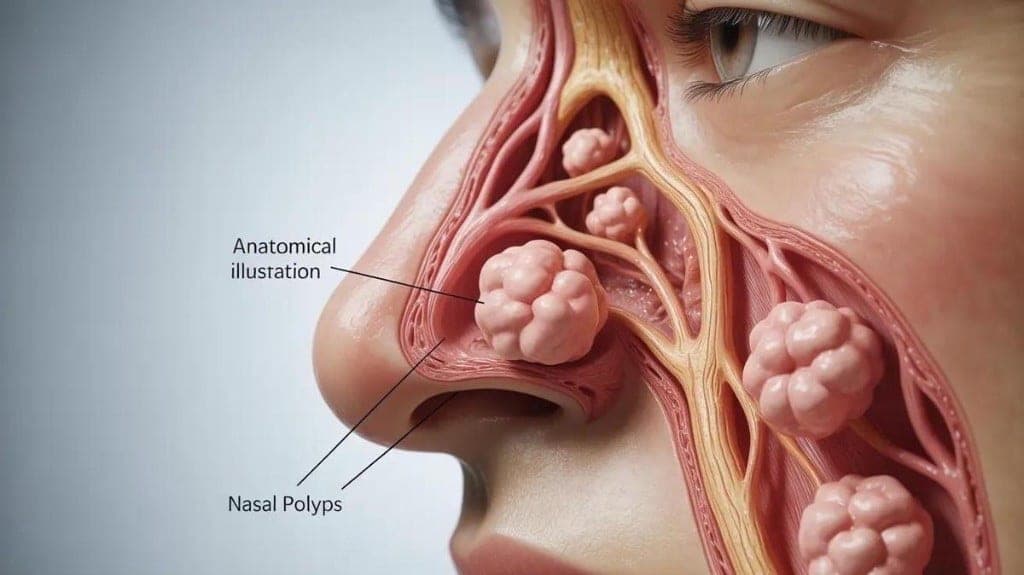
Nasal polyps are soft, painless, noncancerous growths that form on the lining of the nasal passages or sinuses as a result of ongoing inflammation. They're not a single disease on their own, but rather a physical sign of chronic underlying inflammation, most often tied to a condition called chronic rhinosinusitis, in which the lining of the nose and sinuses stays inflamed for 12 weeks or longer. Polyps can also occur alongside asthma and, in a smaller subset of patients, alongside a distinct condition called aspirin-exacerbated respiratory disease, sometimes known as Samter's triad, in which polyps, asthma, and a sensitivity reaction to aspirin and similar medications occur together.
Recognizing the symptoms
The most common symptoms of nasal polyps include persistent nasal congestion that doesn't fully respond to typical allergy or cold treatment, a reduced or completely lost sense of smell, ongoing post-nasal drip, and facial pressure or fullness. Because these symptoms overlap with chronic sinus infections and allergies, nasal polyps are often identified during an evaluation for symptoms that haven't improved with standard over-the-counter treatment.
How treatment typically progresses
Intranasal corticosteroid sprays are typically the first treatment tried, working to reduce inflammation directly in the nasal lining. For patients whose polyps and symptoms don't respond adequately, several further options exist, including a short course of oral corticosteroids, biologic medications, or endoscopic sinus surgery performed by an ENT surgeon to physically remove the polyps and open the sinus passages. These options aren't necessarily used in a strict, fixed order, the right next step often depends on how severe the disease is, whether previous treatments, including prior surgery, have failed, and a shared conversation between patient and physician about the trade-offs involved.
Patients often come in assuming their only options are a nasal spray or surgery, and that's not the full picture anymore. Biologic medications have genuinely changed what's possible for chronic rhinosinusitis with nasal polyps, especially for patients who've already had surgery and seen their polyps come back. It's not a decision with one right answer for everyone, but there are more paths forward than most patients realize.
— Dr. Robert Tamayev, MD, PhD, Allergy Asthma
The biologic medication options
Three biologic medications currently carry an FDA approval specifically for chronic rhinosinusitis with nasal polyps: dupilumab, approved for patients 12 and older, and omalizumab and mepolizumab, both approved for adults 18 and older. These medications work by targeting specific inflammatory pathways involved in polyp formation and are generally considered for patients with more severe disease or those who haven't had lasting improvement from sprays, oral steroids, or surgery. As with any long-term biologic therapy, cost, insurance coverage, and ongoing treatment commitment are all part of the conversation an allergist will walk through with you.
When to book a visit
If you're dealing with congestion that doesn't respond to typical allergy treatment, a noticeably reduced or absent sense of smell, or symptoms that keep returning despite a nasal spray, it's worth scheduling an evaluation to find out whether nasal polyps are part of what's going on and to discuss which treatment path makes sense for you.
Disclaimer: This content is educational and does not substitute for medical advice. Always consult your physician for personal medical questions.